
West Baton Rouge Parish Sex Offender Checks
Louisiana State Police Bureau of Criminal Identification and Information maintains the State Sex Offender and Child Predator Registry. That official registry is the primary source for Louisiana entries. Search by name or geography, compare the profile to multiple identifiers, and note when the search occurred. West Baton Rouge Sheriff questions belong at 850 8th Street in Port Allen or 225-343-9234. Local police also receive information when a registered address is inside an incorporated place.
The Louisiana Department of Public Safety and Corrections registry gateway explains the route to public registry information. It also supplies essential context: people convicted of sex offenses who are supervised in the community are only a fraction of everyone required to register. Registration and probation or parole are legally different statuses.
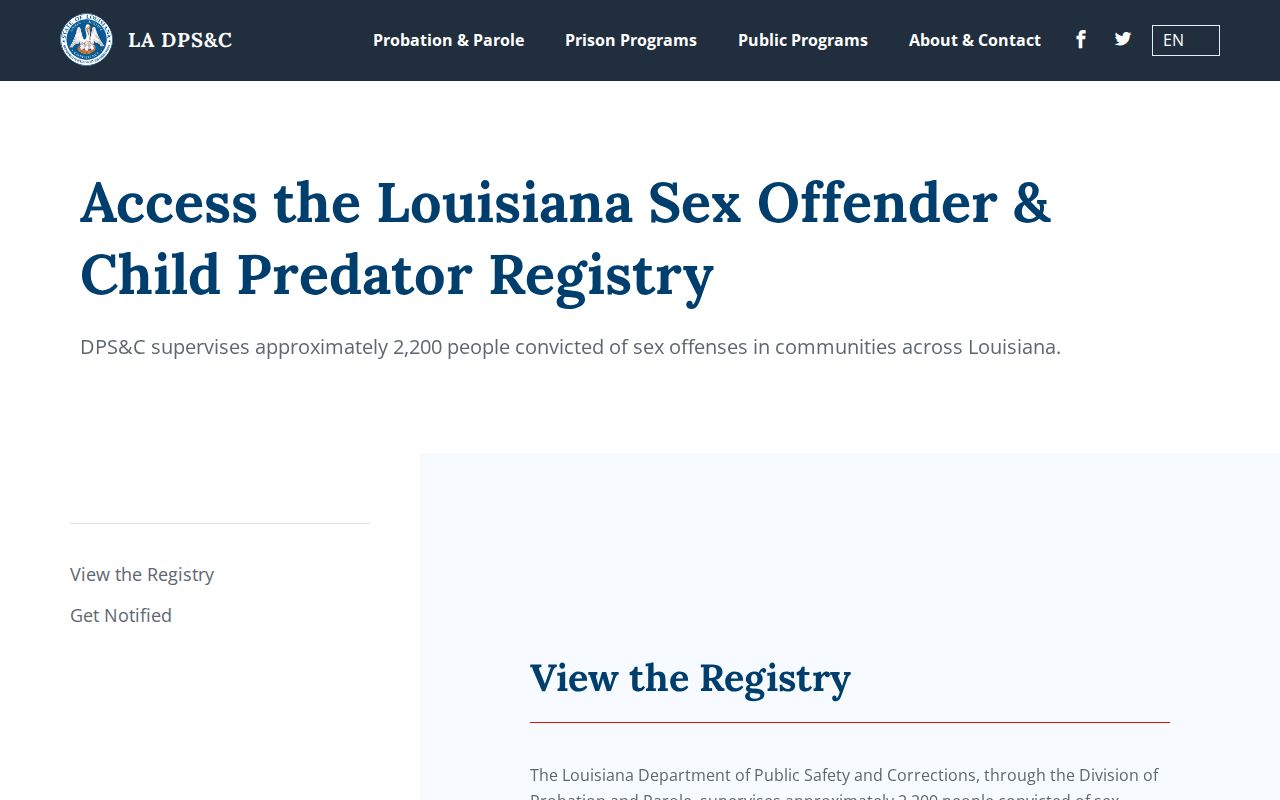
The gateway image connects a West Baton Rouge search to the statewide system without implying that a supervision list and the registry contain the same population.
Search West Baton Rouge Statewide
Start with the official parish or county control rather than a broad internet name search. Selecting West Baton Rouge reduces false matches, while city, ZIP, address, and radius tools can answer a neighborhood question. A geographic search is only as current as the registered location data exposed by law. It is not a census of every person who has committed a sexual offense or every offense that happened nearby.
State Sex Offender Registry Searches
The Louisiana State Police registry page is the official starting point. Accept the live portal’s terms and read its current use notice before searching. Search fields and radius options can change, so use the controls actually displayed rather than relying on an old screenshot.
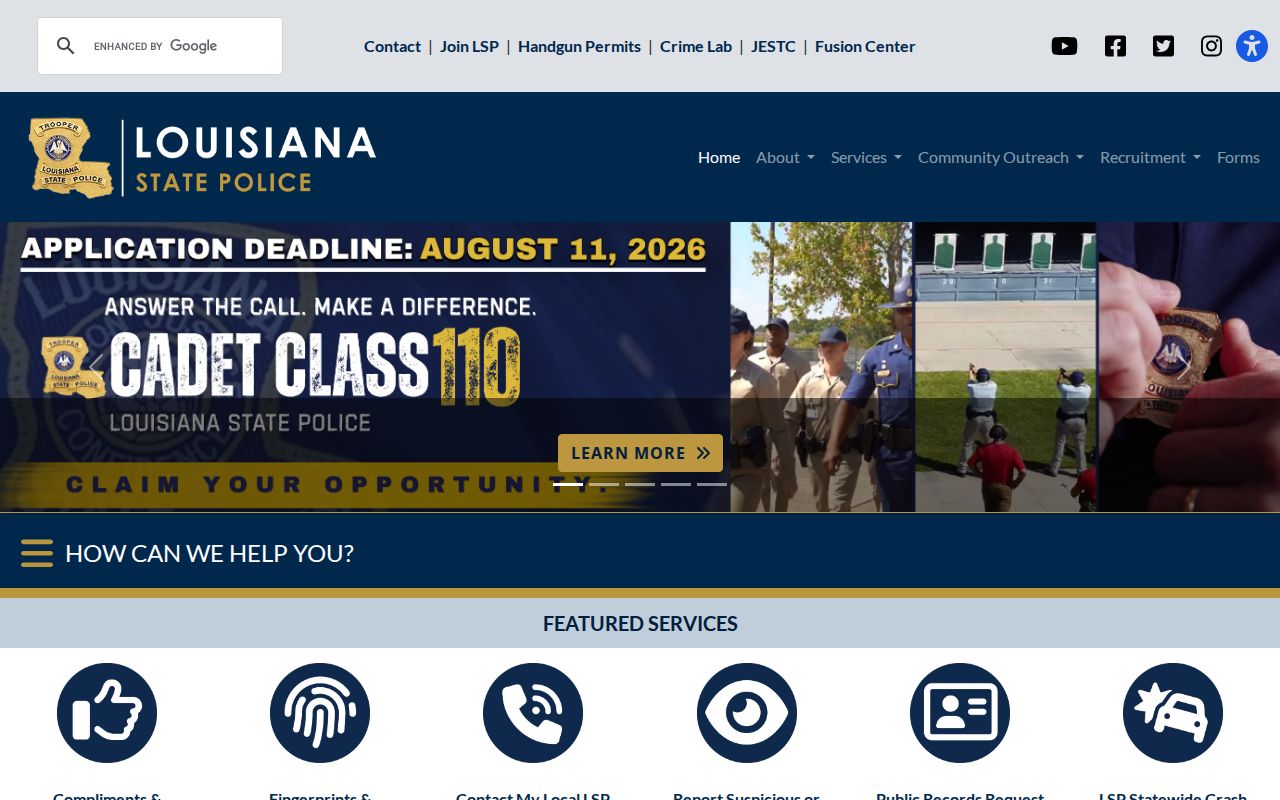
The captured registry view shows the official source readers should use for Louisiana profile details and West Baton Rouge geographic filtering.
- Open the Louisiana registry, review its conditions of use, and proceed to the public search.
- Enter a first or last name, or choose address, city, ZIP, parish, and radius controls for a geographic lookup.
- Review the list or map and compare names, photographs, aliases, physical details, and jurisdiction to avoid a mistaken match.
- Open the complete profile, note registration and compliance fields, and verify any apparent conflict with the registry or West Baton Rouge Sheriff.
| Field Label | Type | Required | Notes |
|---|---|---|---|
| First name | Text | No or unspecified | Combines with other identity fields. |
| Last name | Text | No or unspecified | Primary name-search field. |
| Address | Text | For geographic search | Street or location input. |
| City / ZIP | Text or dropdown | No | Narrows geographic results. |
| Parish / County | Dropdown | No | Select West Baton Rouge. |
| Radius | Dropdown | For radius search | Options depend on the live interface. |
| Map / list view | View toggle | No | Changes geographic presentation. |
NSOPW Adds Cross-State Coverage
The Dru Sjodin National Sex Offender Public Website federates searches from participating jurisdictions. It is useful when a person may have registered outside Louisiana or when a family is comparing locations across a state boundary. It does not replace the Louisiana registry for interpreting a Louisiana entry. A temporary outage or delayed response from one participating jurisdiction can affect the national result.
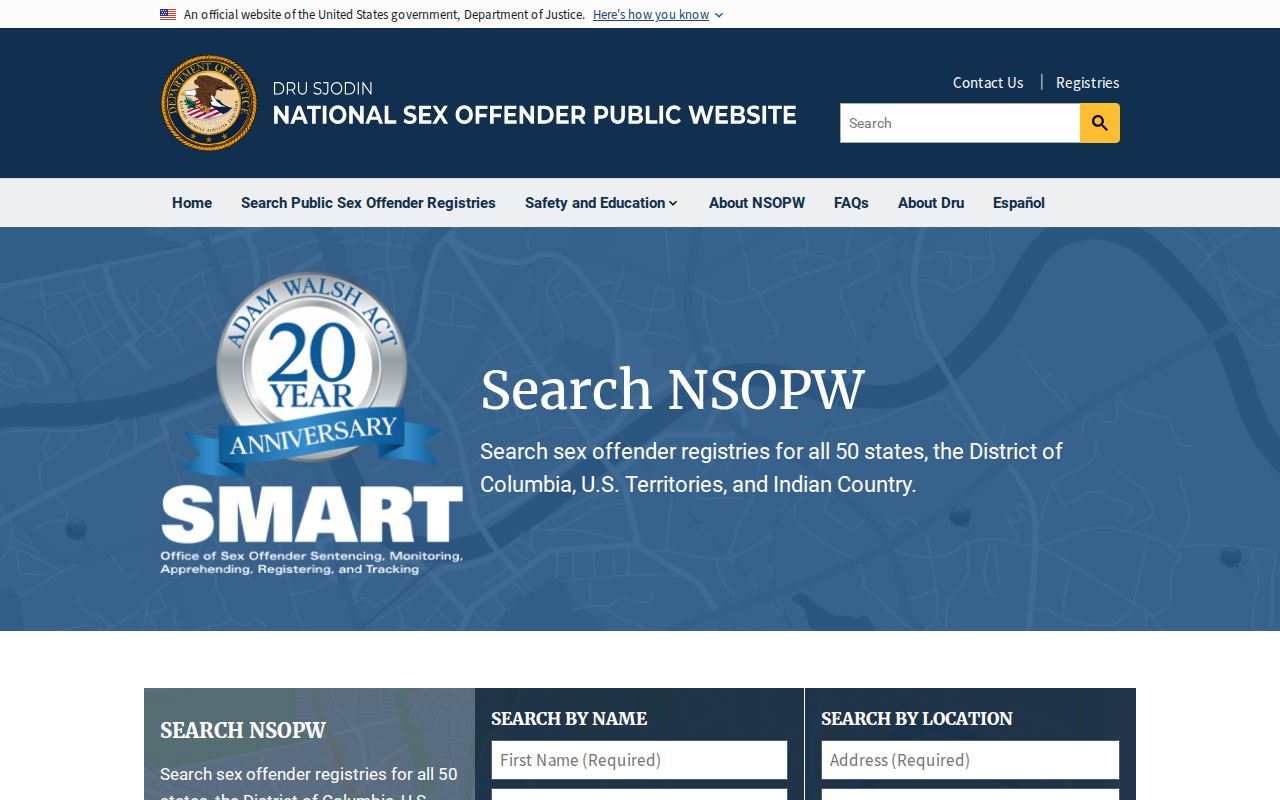
The national interface adds breadth, while the state profile remains the controlling place to examine Louisiana registration details and report a suspected data issue.
Registry Profiles: What They Show
Louisiana public profiles may combine identifying, address, offense, registration, and compliance information. Fields can be blank, and the display can distinguish a current photograph from an older one. Do not copy unnecessary identifying details or assume that every field applies to every registrant. Use the profile to verify identity and understand the official registration entry.
| Name & Aliases | The registered name and aliases reported to help distinguish similar identities. |
|---|---|
| Photo & Physical Description | Current or prior photograph, sex, race, age or birth information, height, weight, hair and eye color, and identifying marks when published. |
| Registered Address | Residence and other registered addresses at the granularity Louisiana law permits; location data can change. |
| Offense & Statute | Offense title, statute, conviction jurisdiction and date, and sentence-related detail when available. |
| Level / Tier | The statutory Louisiana category affecting the general registration period. |
| Registration Status | Compliance, registration beginning and prospective end information, and verification-related fields when displayed. |
| Other Public Fields | Employer or school where disclosure is required, vehicle description or plate, and scars, marks, or tattoos may appear. |
Compliant Is Not a Risk Rating
“Compliant” describes whether the person is meeting reporting duties reflected by the system. It is not a guarantee about present conduct, a prediction of future behavior, or an official safety score. Likewise, a profile marked noncompliant or an address conflict should be referred to the responsible authorities rather than turned into a personal investigation.
If a map and profile disagree, record the date and time of the search and report the apparent problem through the registry or the West Baton Rouge Sheriff. For an incorporated address, the relevant police department may also have a statutory information role. Call 911 only for immediate danger. The reviewed sheriff material did not publish registry office hours, appointment rules, fees, or app alerts, so call before visiting.
An address search also has a narrow meaning. It tests the location entered against addresses currently reported and displayed under Louisiana law. It cannot show everyone who once lived nearby, every offense associated with the area, or unreported movement. When location is the main concern, repeat the search with the street address, city, ZIP, parish filter, and an appropriate radius, then compare the list and map presentations. A name search has a different risk: people may share names. Match the photograph, aliases, physical description, conviction jurisdiction, and offense information before deciding that a result identifies the person sought.
Registration Levels and Duties in Louisiana
Louisiana Revised Statute 15:544 controls the general registration periods, along with restarts, suspensions, repeat-offender rules, and procedures that can affect a particular person. A tier is a statutory classification, not a standalone judgment about current risk. Confirm the offense, conviction jurisdiction, and current profile rather than calculating an end date from a label alone.
| Level / Tier | Duration | Verification Frequency |
|---|---|---|
| Tier I / initial-period offenses | Generally 15 years; possible reduction to 10 after a clean record, court motion, and required treatment documentation. | Follow the current schedule assigned under Louisiana law and confirmed by the registering agency. |
| Tier II | Generally 25 years. | Follow the statutory and agency schedule shown for the registrant. |
| Tier III / aggravated categories | Generally life, subject to the controlling offense and repeat-offender provisions. | Follow the statutory and agency schedule shown for the registrant. |
| Qualifying juvenile lifetime period | Possible reduction to 25 years after the required clean record, motion, treatment documentation, agency review, and hearing. | Determined by the applicable statutory category and registering authority. |
The official research did not establish a single universal verification frequency for each tier that could safely be stated in the table. Registration details may depend on the offense and other statutory provisions, so the sheriff or registry should confirm the duty in a specific case.
How Louisiana Posts End Dates
Under R.S. 15:544.2, the Louisiana Department of Justice Sexual Predator Apprehension Team participates in reviewing registration history and posting a prospective registration end date. Completion can be documented by a formal letter on request. The date remains prospective because statutory suspensions, restarts, later events, or corrections can matter. Readers should treat the live profile and formal agency documentation as stronger evidence than a personal calculation.
R.S. 15:542.1.5 places central registry maintenance with BCII and directs prompt transmission and updating of information, including notice to the sheriff of the residence parish and the chief of police for an incorporated address. This division explains why BCII, the sheriff, municipal police, courts, and the Department of Justice can each touch different pieces of one registration record.
Registry Duty Versus Supervision
Registration does not mean the person is currently on probation or parole, and community supervision does not define the full registry population. Louisiana DPS&C estimates roughly 2,200 people convicted of sex offenses are supervised in the community, but expressly warns that this is only a fraction of all people required to register. LA VINE and probation or parole offices answer custody and supervision questions. The State Sex Offender and Child Predator Registry answers registration questions.
Community notification, address verification, criminal supervision, and investigation of noncompliance are distinct functions even if the same sheriff or police agency participates in more than one. Keeping the functions separate prevents a registry status from being misread as a current sentence or a supervision condition.
Using Registry Information Lawfully
The registry supports personal and family safety planning and community awareness. Verify identity through several fields, recognize that names and addresses change, and report suspected errors or noncompliance through official channels. Do not confront a registrant or household, publish copied profile data, or use a result to make unsupported claims about conduct.
Louisiana registry misuse warning: Do not use registry information to harass, threaten, intimidate, or commit a crime against a registrant or anyone in the household. Registry information also may not be used to deny housing, employment, or services except where Louisiana or federal law specifically permits the decision.